Studio Rhythms.
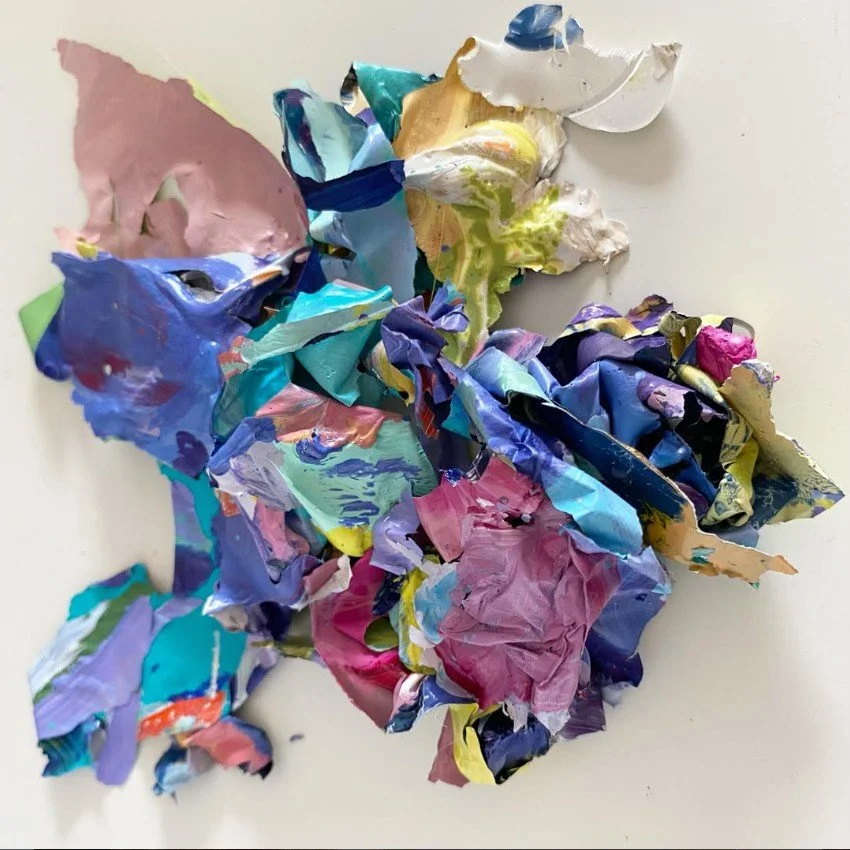
Returning to a slower pace.
The start of February always feels like a quiet breath.
Not the sharpness of January, nor the push of spring — but the pause before something shifts.
Here in the garden studio, the light is soft and low. Some days it’s pale and silvery, others muted by cloud. Everything feels as though it’s gathering itself, not yet ready to move quickly. This is the time of year when the studio feels most necessary to me. Not productive. Necessary.
The world outside asks for speed, response, explanation. Even rest now seems to come with expectations attached. But when I step into the studio, the pace changes.
My body settles before my mind does. Hands move before thoughts arrive. There’s no scrolling, no optimising, no performing - just materials, surface, colour, and time.
The studio gives me permission to be unfinished. It’s a place where nothing has to resolve quickly. Where a painting can sit for days or weeks, asking to be listened to rather than fixed. Where uncertainty isn’t a problem to eliminate, but part of the work itself.
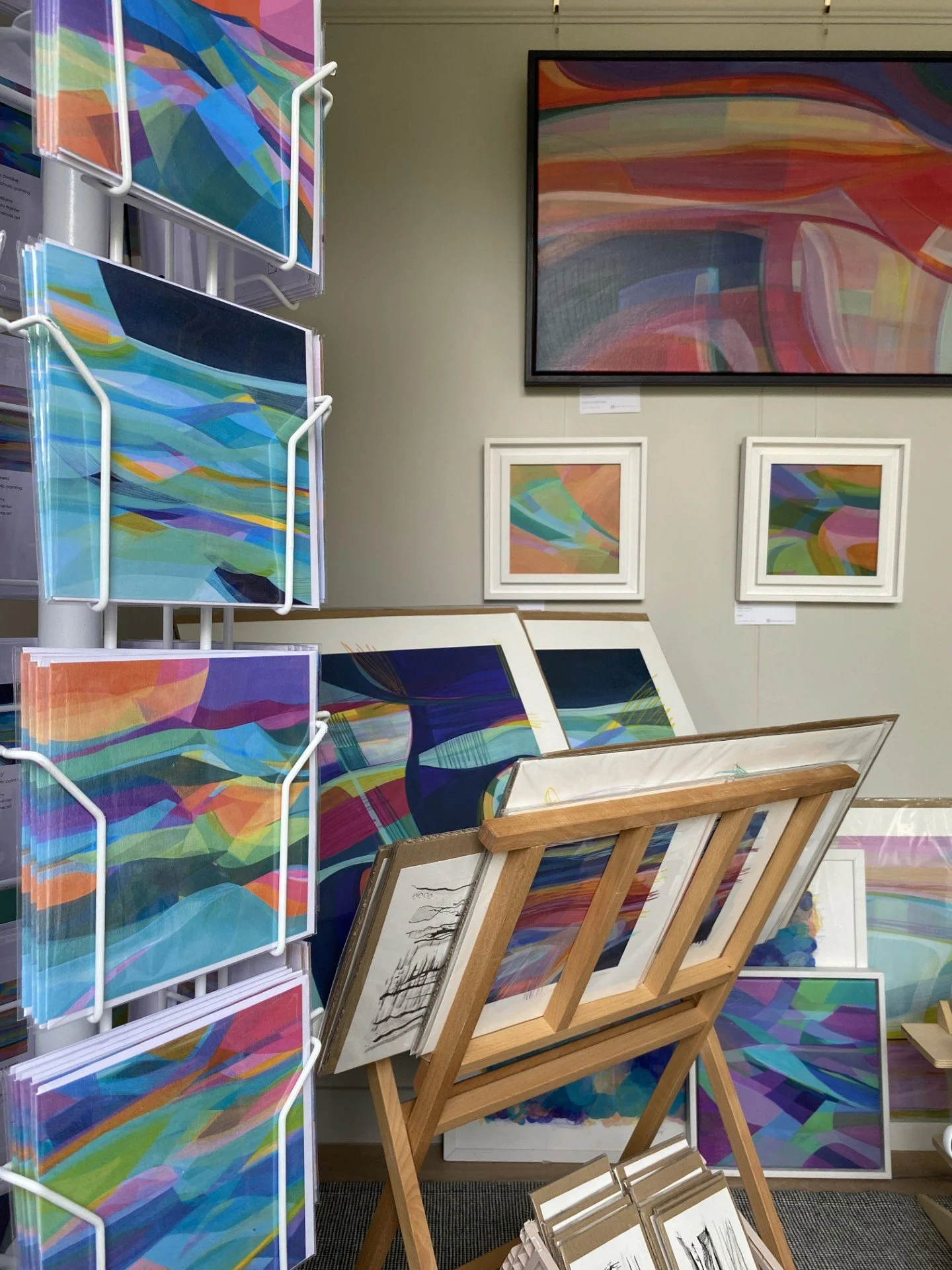
In this small studio in West Wales, I’m reminded that making doesn’t need an audience to be valid.
It needs attention.
It needs patience.
It needs a willingness to stay with something, even when it feels unclear.
I think many of us are quietly craving this now - spaces that don’t demand performance, where we can be present without explanation. Places that allow us to move at the speed of our own nervous systems rather than the speed of the world. The studio offers that kind of safety. Not in a grand way. In a practical, embodied way.
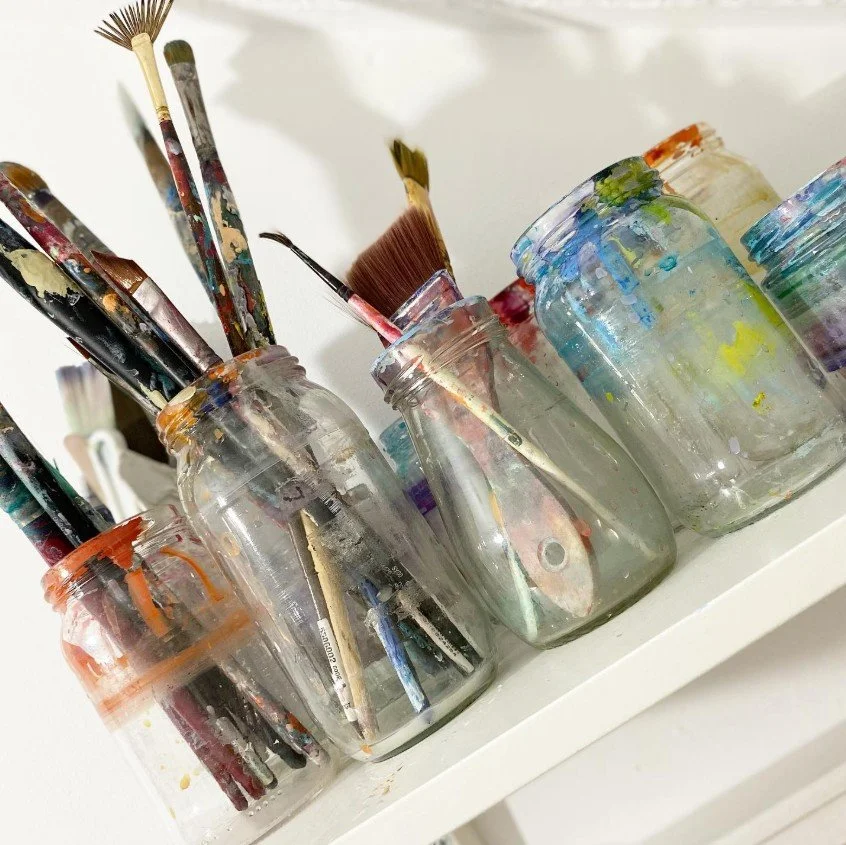
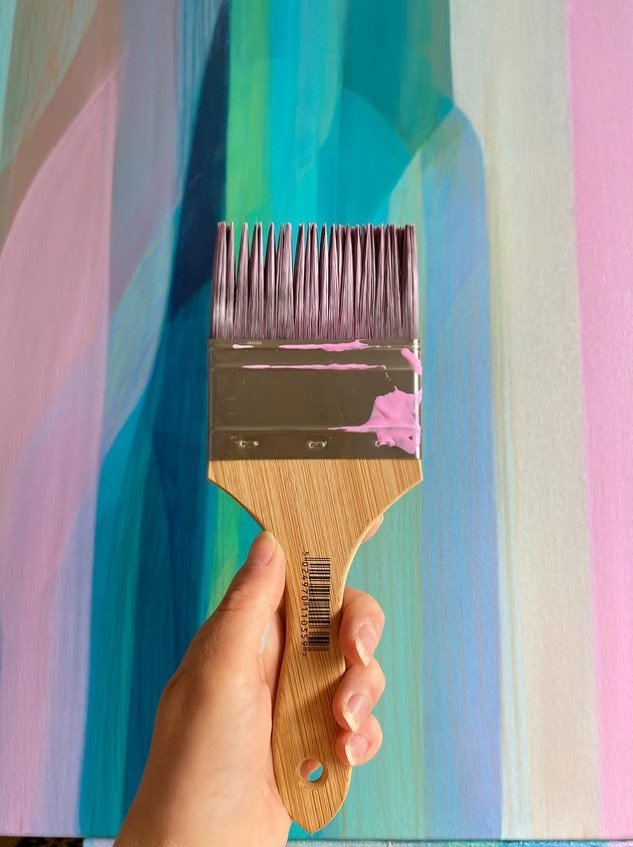
The weight of a brush in the hand. The resistance of paint on canvas. The rhythm of returning, day after day. These small, repeated actions create a steadiness that’s hard to find elsewhere.
Painting, for me, isn’t about escaping reality. It’s about inhabiting it more fully. Paying attention to colour, to edges, to what feels alive or flat. Learning to notice rather than rush.
In winter especially, this feels like a form of care.
Some days nothing changes on the surface of a painting at all but something shifts internally. Perspective softens. Attention deepens. That counts too.
This slow, tactile, place-based way of working is becoming rarer. And that rarity gives it value — not market value, but human value.
It’s what I try to protect in my practice. And it’s what I hope others feel when they encounter the work: a sense of space, breathing room, time held open rather than filled.
As February unfolds, I’m allowing things to remain unresolved a little longer. Letting paintings hover. Letting ideas stay soft.
There will be time for clarity later.
For now, the studio offers something quieter and rarer.
A place to listen.
Notes to keep:
This way of working continues to teach me a few simple things:
Slowness creates clarity.
When we stop rushing toward outcomes, we begin to notice what actually matters.Your body often knows before your mind does.
Physical, tactile practices can regulate and ground us in ways thinking alone cannot.Uncertainty isn’t a failure state.
Allowing ideas to remain unresolved creates depth, rather than diminishing it.Attention is a skill that grows with practice.
Returning to the same space, materials, or routine builds presence over time.Creativity doesn’t need to perform to be valuable.
Making for the sake of experience — not output — restores connection and care.
If nothing else, let this be a reminder:
You’re allowed to move more slowly.
You’re allowed to begin without knowing where it will lead.
You’re allowed to make space for attention.
That, in itself, is something worth keeping.